Best WhatsApp Marketing Tool: 8 Platforms Compared (2026)
- A WhatsApp marketing platform falls into two categories. The free WhatsApp Business App suits solo sellers, and the WhatsApp Business API suits teams that need automation and scale.
- Meta replaced conversation-based billing with per-message pricing on July 1, 2025. This changed how every WhatsApp Business API platform bills you for campaigns.
- Intigate, Wati, AiSensy, Interakt, Brevo, Gallabox, Respond.io, and Twilio cover the main use cases, from budget SMB broadcasting to enterprise-grade automation with bundled Meta setup.
- Retailers get the most value from this kind of platform through cart recovery flows, order updates, and catalog sharing, not one-off promotional blasts.
- From August 2, 2026, EU AI Act Article 50 requires any AI chatbot serving EU customers to disclose that it is a machine, which affects WhatsApp automation flows.
Choosing a WhatsApp marketing tool now means choosing a billing model too.
Since July 1, 2025, Meta charges businesses per delivered template message instead of per 24-hour conversation window.
That single change reshuffled which platforms are actually affordable at scale, and most comparison articles still describe pricing the old way.
This guide compares the tools that matter for e-commerce and retail teams specifically: cart recovery automation, order status updates, and catalog-driven promotions sent through the WhatsApp Business API.
If you want the full method behind how we score platforms, see our best WhatsApp marketing software guide.
You will get a plain comparison of eight platforms, a breakdown of what this software actually costs under the new pricing model, and the compliance changes taking effect in 2026 that most retailers have not budgeted for yet.
Quick answer: The best WhatsApp marketing tool depends on message volume and use case. AiSensy and Intigate’s Starter plan suit budget broadcasting under 5,000 messages a month, Interakt and Gallabox fit retailers running cart recovery and catalog sales, Brevo fits teams that want WhatsApp inside an existing email and SMS stack, and Twilio fits teams building custom workflows with in-house developers. All eight need an official Meta Business Solution Provider relationship, since unofficial WhatsApp tools risk number bans.
Intigate Technologies is an Official Meta Business Partner. We help retail and e-commerce teams pick, configure, and launch the right WhatsApp Business API setup in weeks, not months.
Talk to a WhatsApp API Specialist →What Is a WhatsApp Marketing Tool?
WhatsApp marketing tool: a platform that lets a business send promotional, transactional, or support messages to customers on WhatsApp at scale, usually through the official WhatsApp Business API.
Two products get grouped under this term, and they solve different problems.
The WhatsApp Business App is free and works for a single person managing a shared phone number.
It supports broadcast lists capped at 256 contacts, basic labels, and a catalog. It has no automation, no team inbox, and no analytics.
The WhatsApp Business API is programmable infrastructure.
It requires Meta verification through an official Business Solution Provider (BSP), which is the role every WhatsApp Business API Provider compared below plays.
It supports unlimited contacts, multi-agent inboxes, chatbot flows, and integration with a CRM or e-commerce platform.
A few terms show up across every vendor’s pricing page and are worth defining once.
A WABA (WhatsApp Business Account) is the verified account tied to your business’s Meta Business Manager, not to a single phone.
The Green Tick is Meta’s official business verification badge, granted after identity and trademark checks, and it is separate from basic phone number registration.
The Cloud API is Meta’s own hosting of the WhatsApp Business API; nearly every BSP on this list builds its dashboard on top of it rather than running the older on-premises version.
For a retail or e-commerce team specifically, the case for the API version of this kind of platform comes down to three recurring workflows.
The first is recovering abandoned carts before a customer buys elsewhere. The second is sending order and shipping updates without flooding a support inbox.
The third is sharing a live product catalog inside the chat instead of routing customers back to a website.
None of these run reliably on the free WhatsApp Business App once order volume passes a few dozen messages a day.
| # | WhatsApp Business App | WhatsApp Business API |
| Cost | Free | Platform fee + Meta per-message charges |
| Contact limit | 256 per broadcast | Unlimited |
| Automation | None | Chatbots, drip flows, triggers |
| Team access | Single device | Multi-agent, role-based |
| Verification | None required | Meta Business verification required |
| Best for | Solo sellers, very small shops | Growing and established retail teams |
How We Evaluated These Tools
Each platform was scored against five weighted criteria rather than a simple feature checklist:
- Official Meta BSP status (required, pass/fail). Any platform that could not confirm operating as an official Business Solution Provider was excluded outright, since unofficial access risks number bans regardless of price.
- Automation and chatbot depth (25%). Whether the flow builder, drip logic, and triggers can handle cart recovery and order-status use cases without developer support.
- E-commerce and CRM integration (25%). Native connections to platforms like Shopify or WooCommerce, and to CRM tools, versus relying on generic webhooks.
- Pricing transparency (25%). Whether a vendor publishes exact tiered pricing on its own site versus requiring a sales call. Where a vendor did not publish exact pricing, we labeled the figure as an industry estimate rather than a confirmed rate, and said so directly in the entry below.
- 2026 compliance readiness (25%). Whether the platform’s chatbot flows support the EU AI Act’s point-of-interaction AI disclosure requirement and correctly separate marketing from utility template categories.
Best WhatsApp Marketing Tools in 2026
Intigate
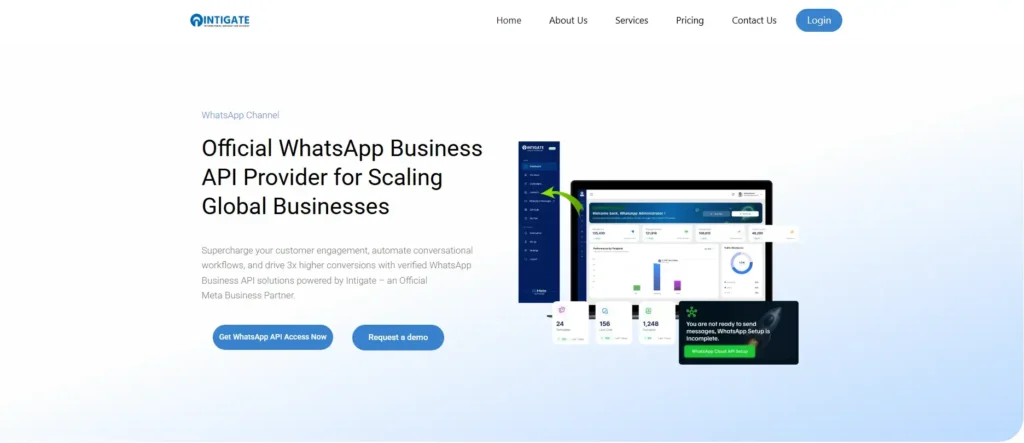
Intigate is an Official Meta Business Partner, named Meta’s Partner of the Year for 2023 and 2024, offering a WhatsApp Business API dashboard with a multi-agent inbox, a drag-and-drop flow builder, broadcast campaigns, and AI chatbot replies.
Plans start at ₹499 a month for a Starter tier capped at 1,000 contacts, with the ₹999 Growth tier unlocking AI chatbot and API or webhook access, up to an unlimited Enterprise tier at ₹1,999 a month, plus 18% GST and Meta’s per-message charges billed separately.
Unlike most tools on this list, Meta Business verification, Green Tick approval, and template setup come bundled into onboarding rather than left for the retailer to arrange on their own.
Best for: Retail and e-commerce teams that want an API dashboard and Meta setup handled by the same partner, without coordinating a separate implementation vendor.
Software selection is only half the job.
Whichever platform you pick, Meta Business verification, template approval, and CRM or catalog integration still need to be configured correctly before a single campaign goes out.
Intigate Technologies, an Official Meta Business Partner, bundles that setup into its own plans above, and also configures it for retail and e-commerce teams that choose any of the other seven tools, across India and the UAE.
Wati
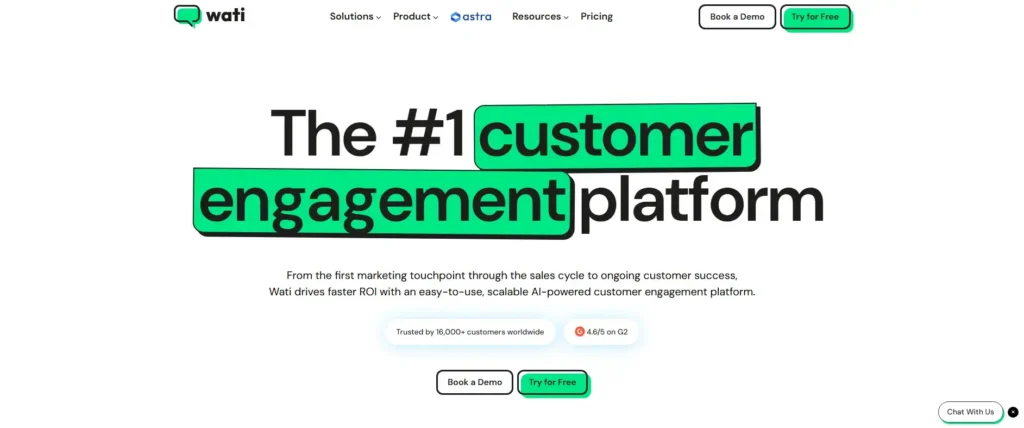
Wati is built specifically for the WhatsApp channel rather than as an add-on to a broader marketing suite.
Industry consensus suggests its plans start around $49 a month for the Growth tier, with Pro and Business tiers priced higher for added automation and team seats.
One limitation reported by users is that lower tiers cap team members and automation flows, which can force an early upgrade for a growing retail team.
Best for: Retail teams that want a no-code chatbot builder focused only on WhatsApp.
AiSensy
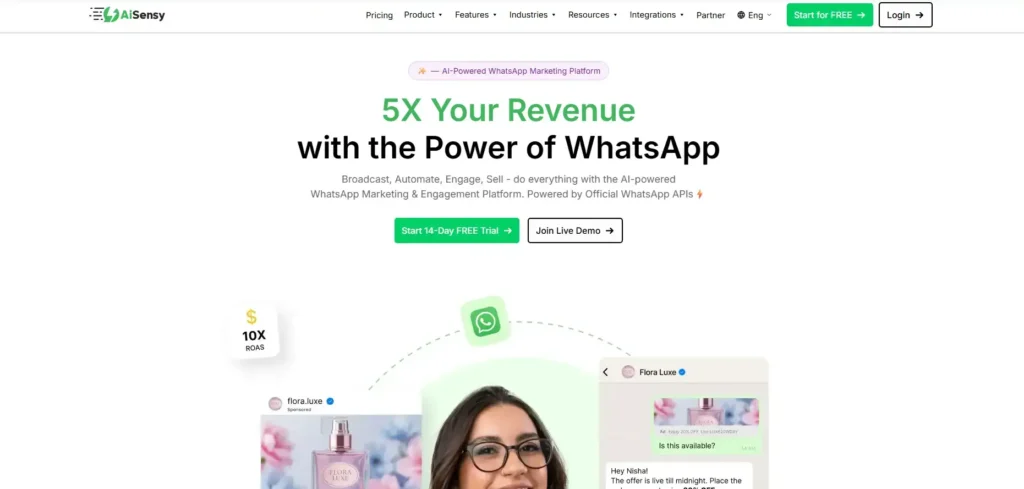
AiSensy is positioned as a low-cost entry point in the Indian market, with industry consensus placing its starting plan near ₹999 a month.
Its automation ceiling is lower than mid-tier competitors, which suits a retailer sending simple broadcast campaigns to fewer than 5,000 contacts a month.
The tradeoff is that businesses outgrowing simple broadcasts typically need to migrate to a higher tier within a year.
Best for: Small Indian retail sellers running basic promotional broadcasts.
Interakt
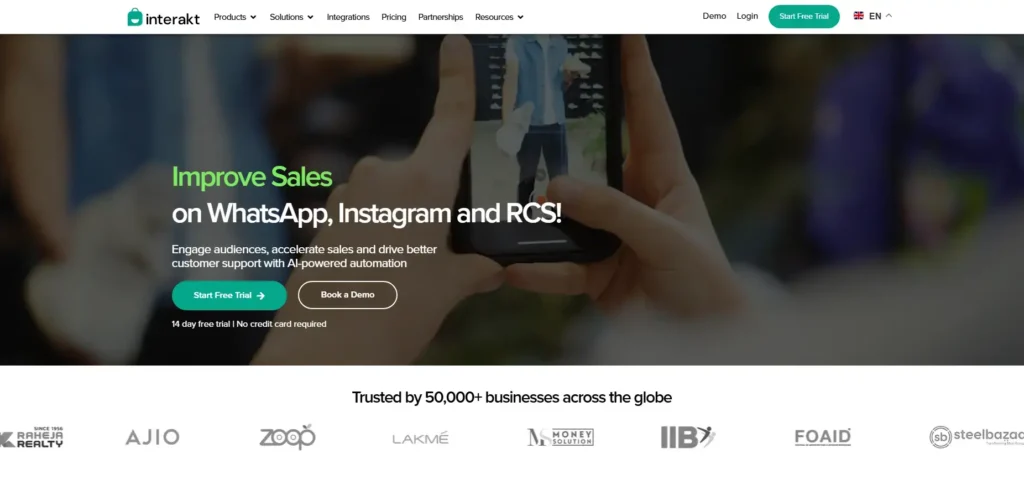
Interakt sits in the mid-tier alongside Gallabox, with industry estimates around ₹2,000 to ₹3,000 a month.
It adds stronger automation and team collaboration features than entry-level tools.
Its CRM-style contact management works well for retailers already inside the Indian D2C ecosystem, though its support for channels outside WhatsApp remains limited.
Best for: Mid-size online retailers that have outgrown basic broadcast tools.
Brevo
Brevo is an official Meta Business Partner that folds WhatsApp into a broader marketing suite alongside email, SMS, and CRM tools.
This makes it a fit for a retail team that wants one platform managing WhatsApp campaigns and order confirmations next to its email marketing.
The tradeoff is that WhatsApp inside Brevo functions as an add-on to its broader suite, so a retailer wanting WhatsApp-first depth may find dedicated tools more capable.
Best for: Retailers who want WhatsApp inside an existing omnichannel marketing stack.
Gallabox
Gallabox centers its product around a no-code chatbot builder and bundles WhatsApp with Instagram messaging.
Industry consensus places its Basic plan near ₹2,999 a month for three users. The lack of a free plan means a retailer cannot trial live campaigns before committing to a paid seat.
Best for: Small retail teams of four to six people who need a chatbot without developer resources.
Respond.io
Respond.io is built for high-volume, multi-channel conversation management rather than campaign broadcasting alone.
It centralizes multi-agent replies and automates lead routing, which suits a retailer running Click-to-WhatsApp ads that generate hundreds of daily inbound chats.
It is built around conversation management rather than broadcasting, so retailers focused mainly on promotional blasts may find it more capable than they need.
Best for: Retail brands scaling paid WhatsApp ad traffic that needs fast agent routing.
Twilio
Twilio charges a flat per-message fee of $0.005 for WhatsApp, in addition to Meta’s per-template fee, which Twilio passes through directly.
It functions as programmable infrastructure rather than a marketing dashboard, so most retail teams pair it with a separate CRM or in-house tooling.
This also means a retailer without engineering resources will need to budget separately for development time, on top of the per-message fees.
Best for: Retailers with a development team that wants to build custom WhatsApp workflows.
Quick Comparison Table
| Tool | Best For | Starting Price (Reported) | Automation Depth |
| Intigate | Dashboard + Meta setup bundled | ₹499–₹1,999/month | Moderate to high |
| AiSensy | Budget broadcast for India | ~₹999/month | Low |
| Interakt | Growing D2C sellers | ~₹2,000–3,000/month | Moderate |
| Brevo | Omnichannel marketing + WhatsApp | Varies by message volume | Moderate |
| Gallabox | Small team chatbot builder | ~₹2,999/month | Moderate |
| Respond.io | High-volume ad-driven chats | Custom/tiered | High |
| Twilio | Custom-built workflows | $0.005/message + Meta fee | Developer-dependent |
| Wati | WhatsApp-only chatbot builder | ~$49/month | Moderate to high |
Pricing for Wati, AiSensy, Interakt, Brevo, Gallabox, and Respond.io are industry estimates gathered from public vendor comparisons as of mid-2026; confirm current rates directly with each vendor before purchasing. Intigate’s figures are sourced directly from its published pricing page as of July 2026 and exclude 18% GST and Meta’s separate per-message charges
What a WhatsApp Marketing Platform Actually Costs
Every WhatsApp marketing budget has two separate layers, and retail teams often plan for only one.
The first layer is the platform fee paid to the software vendor for the dashboard, chatbot builder, and team seats.
The second layer is Meta’s own per-message charge.
Effective July 1, 2025, Meta retired conversation-based billing and now charges per delivered template message instead of per 24-hour conversation window (Meta for Developers, 2026).
Rates depend on the message category and the recipient’s country code, not the business’s location.
Meta groups templates into four categories.
Marketing templates, used for promotions and cart abandonment reminders, carry the highest per-message rate.
Utility templates, used for order confirmations and shipping updates, cost significantly less.
Authentication templates, used for one-time passcodes, are priced similarly to utility.
Service messages, sent as free-form replies inside an open 24-hour customer window, are free (Meta for Developers, 2026).
A concrete example makes the shift easier to budget for.
A retailer sending 10,000 marketing template messages to Indian customers in a month, alongside 10,000 utility messages for order updates, pays Meta’s marketing rate on the first batch and a lower utility rate on the second, even though both are the same volume.
Shifting order confirmations and shipping updates into the utility category, rather than bundling them into a single marketing template, is one of the simplest ways to reduce a retail WhatsApp bill under the current model.
For a retailer, the cheapest way to run WhatsApp campaigns is to shift as much communication as possible into the utility and service categories.
For a full breakdown of Meta’s rate structure by category, see our WhatsApp API for Business Charges guide.
How to model your own Meta fee before signing a contract:
- Pull last month’s message volume and split it by category: marketing, utility, authentication, service.
- Get the current per-category rate for your recipients’ countries directly from Meta’s official rate card, since rates vary by market and are revised periodically. Don’t rely on a vendor’s cached rate table.
- Multiply each category’s volume by its rate, sum the categories, then add the platform’s own monthly fee on top.
- Re-run the model any time your utility-to-marketing message ratio shifts, since that ratio, not total volume, usually drives the bill.
WhatsApp Marketing Compliance in 2026
Meta requires explicit customer opt-in before a business can send marketing templates.
This has not changed, but two other compliance shifts are new for 2026 and directly affect a retailer running an AI-driven WhatsApp automation flow.
From August 2, 2026, Article 50 of the EU AI Act requires any AI chatbot interacting directly with a person to disclose that the user is talking to an AI system, unless this is obvious from context (European Commission, 2026).
A retailer using an AI chatbot on WhatsApp to handle EU customers needs a clear, point-of-interaction disclosure built into that flow before the deadline.
Disclosure needs to sit inside the actual chat flow, at the point where the AI first responds, rather than buried in a privacy policy the customer never opens.
Meta also holds businesses responsible for the category assigned to each approved template.
A retailer that mislabels a promotional message as a utility template to reduce cost risks template rejection or account restriction (Meta for Developers, 2026).
How to Choose the Right WhatsApp Marketing Platform
Match the tool to the scenario, not the feature list.
- If you send fewer than 5,000 messages a month with simple broadcast needs, start with a budget tool like AiSensy and avoid paying for automation you will not use.
- If you run an online store needing cart recovery, order updates, and catalog sharing, choose a platform with native e-commerce integration, such as Interakt or Gallabox.
- If you already run WhatsApp campaigns at high volume through Click-to-WhatsApp ads, prioritize a tool built for fast multi-agent routing, such as Respond.io.
- If your team already manages email and SMS on one platform, add WhatsApp through that same suite, such as Brevo, instead of running a separate tool.
- If you have in-house developers and need custom workflows beyond what a dashboard offers, build directly on infrastructure like Twilio.
Indian retailers running high-volume seasonal campaigns, such as festive sales, often need a managed setup rather than a self-serve dashboard.
If that describes your team, our [Bulk WhatsApp Marketing Service in India] page covers how a managed provider handles template approval and delivery at scale.
Intigate Technologies handles WhatsApp Business API setup, template approval, and campaign configuration for retail and e-commerce teams across India and the UAE.
Get Your WhatsApp API Set Up →Conclusion
The right WhatsApp marketing tool depends on volume, not brand recognition.
A small retailer sending occasional broadcasts does not need the same platform as a D2C brand automating cart recovery across thousands of customers.
Three things matter more than any feature list.
First, confirm the tool operates through an official Meta Business Solution Provider.
Second, budget for Meta’s per-message pricing separately from the platform fee, since that changed materially in July 2025.
Third, if your chatbot serves EU customers, build in AI disclosure ahead of the August 2026 deadline.
Compare the eight platforms above against your actual message volume and use case, not just their marketing pages, before committing to a contract.
Frequently Asked Questions
What is the best WhatsApp marketing tool for small businesses?
For small retailers sending fewer than 5,000 messages a month, AiSensy is commonly cited as the most affordable entry point, with Wati as an alternative for teams that want a stronger no-code chatbot builder on a WhatsApp-only platform.
Is there a free WhatsApp marketing option?
The WhatsApp Business App is free, but limits broadcasts to 256 contacts and offers no automation. Paid WhatsApp marketing platforms built on the WhatsApp Business API start at roughly $49 a month plus Meta’s per-message charges.
What is the difference between the WhatsApp Business API and a WhatsApp marketing platform?
The WhatsApp Business API is Meta’s underlying infrastructure. A WhatsApp marketing platform is the software layer, such as Wati or Interakt, that businesses use to access that API through a dashboard, chatbot builder, and team inbox.
How much does WhatsApp marketing software cost per month in India?
Indian platforms like AiSensy start near ₹999 a month, with Interakt and Gallabox in the ₹2,000 to ₹3,000 range. Meta’s per-message fees apply on top of the platform fee under the pricing model effective since July 2025.
Do I need Meta’s approval to use WhatsApp marketing software?
Yes. Any platform built on the WhatsApp Business API requires the business to complete Meta Business verification, and every marketing message template must be submitted for Meta’s approval before it can be sent.